Recognitions

Rewardian vs Assembly
How does Rewardian compare to Assembly?
Rewardian and Assembly are both employee recognition platforms, but they suit different buyers. Assembly is an affordable, self-serve recognition and engagement tool with a free tier and an AI-powered intranet layer, popular with small and mid-sized remote and hybrid teams. Rewardian is a fully supported mid-market platform: every client gets a dedicated Account Manager and a guided 4–6 week launch, and the same platform runs employee recognition, internal sales incentives and external B2B channel incentives. If you want the lowest-cost peer recognition and are happy to run it yourself, Assembly is a sensible choice. If you want a partner running the program alongside you and incentives that reach your sales team and channel partners, Rewardian is built for that.
Assembly, founded in 2017 and venture-backed, is used by more than 4,000 organizations. It pairs peer-to-peer recognition with no-code workflow automations, surveys, an intranet and its Dora AI assistant, and its rewards run on a markup-free, pay-on-redemption model across gift cards, swag and donations. Its pricing is published and includes a free tier.
Rewardian, founded in 2015, is the sister company of Brandmovers, which has run loyalty, promotions and digital engagement programs since 2003. Headquartered in Atlanta with offices in London and Mumbai, Rewardian is calibrated to the 200–5,000-employee mid-market. Alongside recognition it runs internal sales incentives and external channel programs for distributors, dealers and partners, with a 10M+ reward catalog that includes Switchfly-powered travel and branded swag. Every client gets a dedicated Account Manager, monthly check-ins and quarterly business reviews, and employees get US-based support by phone, email and in-platform, in English and Spanish. Rewardian reports a 94% client retention rate.
The two overlap on core peer recognition. They differ on service model, rewards breadth and how far incentives reach: Assembly is designed to be run by the client, while Rewardian is designed to be run with the client.
Rewardian vs Assembly: feature comparison
|
Feature |
Rewardian |
Assembly |
Best fit |
|---|---|---|---|
|
Primary market |
Mid-market (200–5,000 employees) |
Small and mid-sized teams, often remote or hybrid |
Rewardian for mid-market |
|
Use cases in one platform |
Employee recognition, internal sales incentives, external B2B channel incentives |
Employee recognition, engagement and intranet |
Rewardian |
|
Account management & support |
Dedicated Account Manager at every tier; monthly meetings and QBRs; US-based employee support in English and Spanish |
Self-serve, lower-touch support |
Rewardian |
|
Implementation |
Guided, 4–6 weeks, with a staging environment for testing |
Fast self-serve setup |
Depends on priority: Assembly to self-deploy, Rewardian for a managed launch |
|
Pricing |
Published: $2–$5 per seat plus ~$2,500 setup |
Published: free tier, then roughly $2–$6 per member |
Depends on priority: Assembly for lowest entry cost, Rewardian for included services |
|
Recognition, milestones & nominations |
Peer and manager recognition, milestones, nominations, badge boosting |
Peer and manager recognition, milestones |
Tie |
|
AI assistance |
AI Recognition Assistant, multilingual voice-to-text recognition, recognition reminders |
Dora AI assistant for content, workflows and insights |
Tie |
|
Gamification |
Bingo, scratch-off boards, challenges and contests, leaderboards, badges |
Recognition-led, with fewer game mechanics |
Rewardian |
|
Reporting & analytics |
Program snapshot report (adoption, budget health, KPIs), configurable dashboards, custom-field and payroll exports |
Engagement dashboards and survey reporting |
Tie |
|
Rewards |
10M+ options, Amazon Business, Switchfly travel, branded swag and kits |
Gift cards, swag and donations, no markup |
Rewardian for breadth |
|
Integrations |
Workday, SAP SuccessFactors, ADP, Oracle/PeopleSoft, Microsoft Dynamics, Slack, Teams, SSO, REST Open API |
Broad HRIS sync (including Workday, ADP, BambooHR, Rippling, UKG), SSO, Slack, Teams |
Tie |
|
Internal sales incentives |
Native, with CRM-automated earning (Engagement Plus tier) |
Not offered |
Rewardian |
|
External B2B channel incentives |
Native: SKU and brand rules, partner tiers, MDF and rebate options |
Gifts to non-employees only |
Rewardian |
|
Security & compliance |
SOC 2 Type 2, PCI, GDPR |
SOC 2 Type II, GDPR, Data Privacy Framework |
Tie |
Rewardian vs Assembly: Evaluation Criteria
Which is best for self-serve teams vs mid-market managed programs?
Assembly suits small and mid-sized teams that want to set up and run recognition themselves; Rewardian suits 200–5,000-employee organizations that want a managed program and incentives beyond their employees. Assembly’s free tier, published per-member pricing and modern interface make self-service adoption easy. Rewardian assigns a dedicated Account Manager who helps design the program, runs the launch and stays involved afterward — the kind of support a stretched HR team often needs. Before launch, Rewardian worked with Opportunities, Inc.’s executive team to design a rewards payout plan tied to monthly departmental KPIs, so the build itself was straightforward.
Who is not the right fit for either?
Large enterprises with deep employee-listening requirements, and buyers who only want a discounts marketplace, are usually a poor fit for both. Very small teams that only need free peer kudos will find Assembly’s free tier the simpler choice, while Rewardian is built for organizations that want a supported program rather than a lightweight tool. Neither is an HRIS; both integrate with your system of record.
How do Rewardian and Assembly compare on pricing?
Both publish their pricing. Assembly has a free tier and paid plans commonly cited at about $2, $4 and $6 per member per month, with rewards billed at face value when redeemed. Rewardian lists $2–$5 per seat plus a one-time setup fee of about $2,500, with a dedicated Account Manager included at every tier. Rewardian’s price rises with the feature tier: internal sales incentives are included in the Engagement Plus tier ($5 per seat), and travel and experiential rewards start at the Engagement tier ($4 per seat). Contracts carry a 12-month minimum term and a monthly minimum, and some integrations, such as Slack, Microsoft Teams and HRIS file feeds, carry one-time setup fees at lower tiers, typically waived at Engagement Plus. Channel incentive programs are priced on request. For a price-led decision on simple peer recognition, Assembly will usually cost less; for a program that needs included services, a broader catalog and sales or channel incentives, compare total program value rather than seat price.
How do migration and switching costs compare?
Both are straightforward to adopt, but they differ in who does the work. Assembly is set up by the client, with quick connections to HRIS and chat tools. Rewardian’s 4–6 week guided implementation puts the Account Manager on the migration with you: discovery and program design, a staging environment for testing before launch, weekly implementation calls and role-based training. When Wheels merged with Donlen and LeasePlan, Rewardian moved the combined workforce off two separate rewards platforms, and 96% of employees received points from a manager’s budget within the first 90 days. When Aquatrols’ previous loyalty vendor closed, Rewardian relaunched the program quickly while preserving existing point balances.
What integrations does each support?
Both integrate broadly with HRIS, SSO and collaboration tools. Assembly offers extensive HRIS sync, including Workday, ADP, SAP SuccessFactors, BambooHR, Rippling and UKG, plus SSO, Slack and Microsoft Teams. Rewardian’s native connectors include Workday, SAP SuccessFactors, ADP, Oracle/PeopleSoft and Microsoft Dynamics, plus Slack, Microsoft Teams, Beekeeper (for deskless workers), LMS platforms and SSO; other systems connect through Rewardian’s REST Open API, as Caring Senior Service did to link Rewardian with its proprietary Tendio software. For sales incentives, Microsoft Dynamics is Rewardian’s native CRM; other CRMs connect through the Open API.
How do Rewardian and Assembly compare on compliance and security?
Both hold SOC 2 Type 2 and are GDPR-compliant. Assembly is also certified under the EU-U.S. Data Privacy Framework; Rewardian adds PCI certification, which matters if payment-card data is in scope for your program. Request each vendor’s current attestations during procurement.
What support and services does each provide?
This is the clearest difference between them. Assembly is built for self-service: setup is fast and the product is easy to run, but dedicated account management is not emphasized on lower plans. Rewardian assigns a dedicated Account Manager to every client from implementation onward, holds monthly client meetings and quarterly business reviews, and can bring in creative, product and technology staff when needed. Rewardian also runs its own in-house reward fulfillment, and employees get a separate, US-based support team by phone, email and in-platform, in English and Spanish, with critical issues handled under documented SLAs. MTSI’s Benefits Manager put it this way: “Our favorite thing about Rewardian is their ability to listen to us.”
Rewardian Differentiators
-
Recognition, sales and channel in one platform — Rewardian runs employee recognition, internal sales incentives and external B2B channel incentives together, with SKU- and brand-level points rules, partner tiers, deal-registration triggers and MDF or rebate options. Assembly has no sales incentive program and can send gifts to non-employees, but it does not run structured channel programs.
-
Proven channel results — A Canadian industrial distributor’s enrolled customers grew purchases by 25% on average, against 5% for customers who didn’t enroll. Signia’s B2B loyalty program delivered 15% unit growth among members within 12 months, and Aquatrols raised off-season sales by up to 23%.
-
A dedicated Account Manager at every tier — Monthly meetings, quarterly business reviews and US-based employee support in English and Spanish come with every program, versus Assembly’s self-serve model.
-
Broader rewards — 10M+ reward options, including Amazon Business merchandise, Switchfly-powered travel and experiences, branded swag kits and bulk physical awards.
-
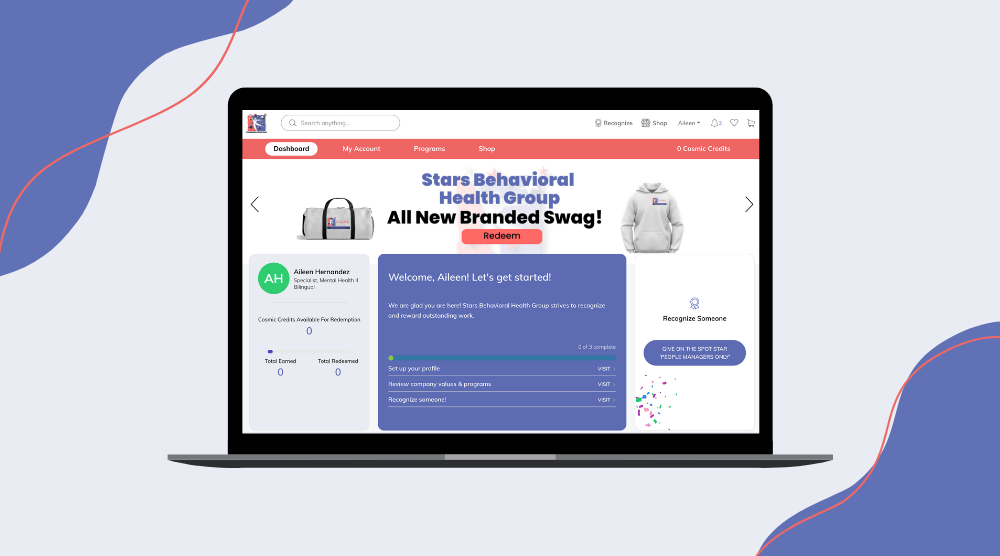
Gamification that drives participation — Bingo boards, scratch-off games, challenges and contests tied to sales targets, training or wellness goals, and leaderboards. Stars Behavioral Health Group recognized 100% of its employees within eight months using a Bingo-based program, and 76% of Wheels employees played the Scratch Off Board when its program relaunched.
-
PCI certification — Rewardian holds PCI certification alongside SOC 2 Type 2 and GDPR.
-
Retention — A 94% client retention rate.
Where Assembly stands out: a free tier and a low entry price, fast self-serve setup, a modern interface, a no-code intranet and workflow layer with its Dora AI assistant, and a strong G2 rating across thousands of reviews. For a price-sensitive team that wants simple peer recognition and is happy to run it in-house, Assembly is a good choice.
Verdict: which should you choose?
Choose the platform that matches how you want to run the program and how far your incentives need to reach.
Choose Assembly if you are a small or mid-sized team that wants a free tier or the lowest entry price, prefers to set up and run recognition yourself, values a light intranet and workflow automations, and does not need sales or channel incentives.
Choose Rewardian if you are a mid-market organization that wants a dedicated Account Manager and a guided 4–6 week launch, a broader rewards catalog with travel and branded swag, and employee recognition, sales incentives and channel incentives in one platform.
|
Talk to Rewardian See how a recognition program that also covers your sales team and channel partners would look for your organization, with a dedicated Account Manager and published per-seat pricing. Request a Rewardian demo. |
Frequently Asked Questions
Is Rewardian a good Assembly alternative?
Yes, particularly for mid-market organizations that want more than self-serve peer recognition. Rewardian covers core recognition and adds a dedicated Account Manager, a guided launch, a broader rewards catalog, and internal sales and external channel incentives. Assembly remains a good low-cost, self-serve choice, with a free tier.
What is the main difference between Rewardian and Assembly?
Service model and incentive scope. Assembly is an affordable, self-serve recognition and engagement tool with an intranet layer. Rewardian is a fully supported mid-market platform that runs employee recognition, internal sales incentives and external B2B channel incentives together.
Does Assembly offer sales or channel incentives?
Assembly does not offer a sales incentive program. It can send gifts to people outside the organization, such as clients or candidates, but it does not run structured channel programs with SKU-level rules or partner tiers. Rewardian runs both natively.
How much does Rewardian cost compared with Assembly?
Assembly has a free tier and paid plans commonly cited at about $2–$6 per member per month. Rewardian publishes $2–$5 per seat plus a setup fee of about $2,500, with a 12-month minimum term and a dedicated Account Manager at every tier. Internal sales incentives are included at the $5 Engagement Plus tier, and channel programs are priced on request.
Which is better for mid-market companies?
It depends on how you want to run the program. Assembly serves mid-sized teams that prefer to self-administer and keep costs low. Rewardian is purpose-built for the 200–5,000-employee range, with included services, a broader catalog and native sales and channel incentives.