
Recognitions

Retention pressure is concentrated at the frontline
Turnover in financial services varies significantly by role. While the finance industry’s overall separation rates are among the lowest of any sector, frontline branch and credit union roles experience much higher churn. Tellers and member service representatives — the employees closest to members and customers — are often the hardest positions to retain, with Retensa estimating annual turnover rates of 20–24% for these roles.
The cost of replacing these employees can also be significant, with estimates ranging from 50–150% of an employee’s salary (a vendor estimate, not an official industry benchmark).
Overall turnover benchmarks can paint a different picture. One 2026 workforce dataset from BambooHR reported finance industry turnover at 5.6%, but these figures often skew toward smaller employers and corporate roles, understating the frontline retention challenges community banks and credit unions face.
For Rewardian’s buyers, the frontline is where retention is won or lost.

Stress and burnout remain elevated
The high-stakes, deadline-driven nature of financial services keeps pressure high. Across the U.S. workforce, employees are experiencing increasing levels of stress and burnout, creating additional challenges for organizations trying to maintain engagement and performance.
The Aflac WorkForces Report (2025) found that 72% of employees report moderate-to-very-high stress levels — a six-year high. Similarly, the Eagle Hill Consulting Workforce Burnout Survey, conducted by Ipsos in November 2025, found that 55% of employees are experiencing active burnout.
Financial stress adds another layer of pressure. In an industry built around money management, 59% of employees report feeling stressed about their own finances, according to the PwC 2026 Employee Financial Wellness Survey. Combined with demanding client expectations and fast-moving market cycles, these pressures make employee engagement and support more important than ever.

Culture and leadership shape who stays
Pay and workload are major drivers of attrition in financial services, but compensation alone does not determine whether employees stay. Workplace culture, manager relationships, and feeling valued also play a significant role in long-term retention.
Global engagement remains a challenge, with only ~20% of employees reporting they are engaged at work — an all-time low, down from 21% the previous year (Gallup, State of the Global Workplace 2026). Gallup also identifies managers as one of the biggest factors influencing whether teams become engaged or disengaged.
Consistent recognition from leadership is one way organizations can strengthen those relationships. Alongside competitive compensation and manageable workloads, recognition helps keep experienced, hard-to-replace employees connected and committed.

The Reality of Burnout in ManufacturingHard work drives this industry: long shifts, quick problem-solving, and relentless follow-through. But there is a fine line between dedication and burnout. When once-reliable employees disengage, call out more often, or quietly job hunt, it takes a toll on productivity, retention, and morale. Addressing burnout isn’t just good for employees—it is essential for long-term success. |
|
 |
|
|
|
Balancing Expansion and Retention: The Future of Hiring in ManufacturingTurnover and retirement rates have been steadily increasing, with 66% of manufacturers reporting that filling open positions now takes longer. The challenge of recruiting skilled workers has put additional pressure on companies, forcing them to refine hiring strategies and invest in employee retention efforts. |
Consequences of a poor manufacturing work cultureA lack of creativity and innovation leaves employees disengaged, hindering both personal growth and company progress. In manufacturing, poor culture often drives workers to seek more fulfilling roles elsewhere. This revolving door effect reduces productivity and increases training costs. While there’s momentum to improve culture, real change requires a fundamental shift in mindset—one that takes time, commitment, and a break from outdated norms. |
|
 |
How Rewardian Helps Financial Services Teams

Tailored Recognition Programs
Rewardian’s recognition and milestones tools help celebrate the moments that matter in financial services — service anniversaries, client wins, referrals, and values-based behaviors — through peer-to-peer recognition, manager-to-employee recognition, and nominations. Reinforcing the right behaviors supports engagement among tenured teams and gives frontline staff reasons to stay.

Rewards your team values
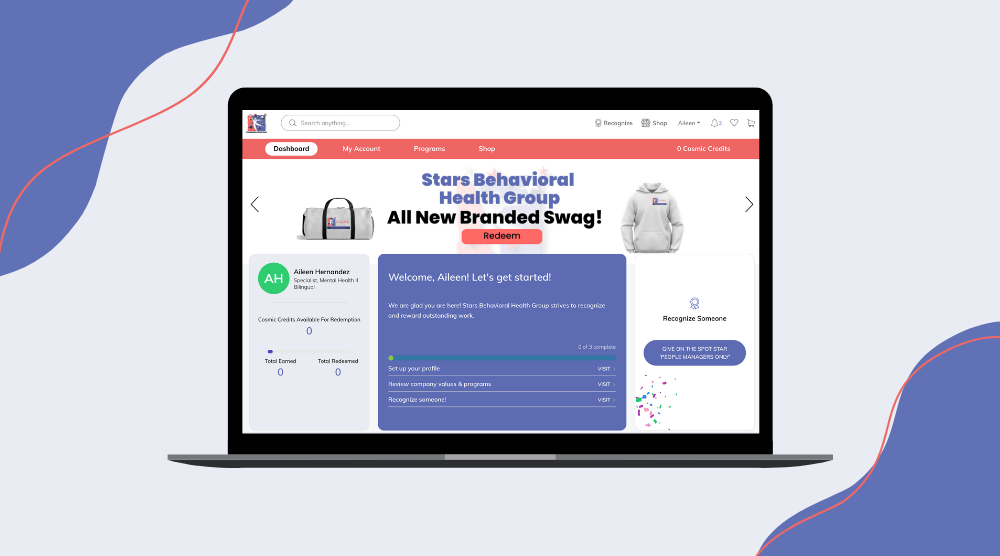
Rewardian’s rewards catalog spans 500K+ rewards and 10M+ options — global merchandise (via Amazon Business), gift cards, and no-minimum branded swag — with travel and experiences (Switchfly) and concierge available on higher program tiers, so financial employees can choose rewards that resonate.

Analytics that inform retention
Rewardian’s real-time analytics and custom KPI dashboards give leaders a clear view of engagement and participation by team and location — a useful input to retention strategy, not a standalone fix.

Built for the compliance bar financial services sets.
Rewardian is SOC 2 Type II certified, PCI certified, and GDPR compliant, with single sign-on (SSO) and secure multi-tenant infrastructure — the security and data-handling standards banks and credit unions expect before rolling out any employee platform.