Recognitions

Rewardian vs Awardco for Sales Incentives
How does Rewardian compare to Awardco for sales incentives?
Rewardian and Awardco both let you run sales incentives in the same platform as employee recognition, so your sales team and the rest of the company share one program, one rewards catalog and one login. The difference is in how the sales side works. Awardco centers on fast, flexible rewards — SPIFFs, targeted incentives, spendable A-Pay cards and physical spot-reward cards — on top of its recognition platform. Rewardian centers on rules-based incentives that earn automatically from your sales data, with gamified contests, a dedicated Account Manager who helps design the program, and published pricing. If you want the quickest way for managers to hand out sales rewards, Awardco is a strong choice. If you want sales incentives that run on your own rules and data, built and managed with a partner, Rewardian is built for that.
Awardco is one of the fastest-growing recognition and rewards platforms, with a $165 million Series B in 2025 at a valuation above $1 billion and 4.9-star ratings on G2 and Capterra. For sales teams it offers SPIFFs and targeted incentives, A-Pay cards that let winners spend rewards immediately, and AwardCodes — trackable cards a sales manager can hand out on the spot for any sales challenge or contest — all on its markup-free Amazon Business rewards catalog.
Rewardian, founded in 2015, is the sister company of Brandmovers, which has run loyalty, promotions and incentive programs since 2003. Headquartered in Atlanta with offices in London and Mumbai, Rewardian runs employee recognition, internal sales incentives and external channel incentives in one platform for 200–5,000-employee organizations. Sales points can be earned automatically from CRM data — calls made, meetings set, training completed, deals closed and quota attained — under rules you set for tiers, multipliers, bonuses, growth targets and specific products or SKUs.
Both put recognition and sales incentives in one place. They differ on how incentives are earned, how much gamification and program design support comes with them, and how you buy.
Rewardian vs Awardco: sales incentive feature comparison
|
Feature |
Rewardian |
Awardco |
Best fit |
|---|---|---|---|
|
Recognition and sales incentives in one platform |
Yes: recognition, internal sales incentives and external channel incentives |
Yes: recognition plus SPIFFs and targeted incentives |
Tie |
|
How sales points are earned |
Automatically from CRM data — calls, meetings, training, closed deals, quota attainment — plus manager awards |
SPIFFs and targeted incentives issued by managers and admins, with automation |
Rewardian for data-driven earning |
|
Incentive rule types |
Tiers, multipliers, bonuses, growth targets, challenges, product and SKU rules |
Not published |
Rewardian (published; Awardco: not published) |
|
Contests and gamification |
Challenges and contests tied to sales targets, leaderboards, bingo, scratch-off, badges; assignable by role |
Sales challenges and contests |
Rewardian |
|
Rewards and payout |
10M+ options, Amazon Business, Switchfly travel, branded swag, in-house fulfillment |
Markup-free Amazon Business; spendable A-Pay cards; physical AwardCodes for on-the-spot rewards |
Depends on priority: Awardco for instant-spend and on-the-spot rewards, Rewardian for catalog breadth and travel |
|
CRM connection |
Microsoft Dynamics natively; other CRMs through the REST Open API |
Salesforce among its listed integrations |
Depends on priority: Awardco for Salesforce-centric teams (confirm scope), Rewardian for Dynamics or custom data feeds |
|
Channel partner incentives |
Native: distributor, dealer and partner programs with SKU rules and partner tiers |
Not offered |
Rewardian |
|
Pricing |
Published: $2–$5 per seat plus ~$2,500 setup; sales incentives included at $5 (Engagement Plus) |
Quote-only |
Rewardian |
|
Implementation |
Guided, 4–6 weeks, with a staging environment for testing |
Typically 4–12 weeks |
Rewardian |
|
Program design and support |
Dedicated Account Manager at every tier; incentive program design; monthly meetings and QBRs |
Dedicated customer success manager; Center of Excellence consulting |
Tie |
|
Reporting |
Program snapshot report, configurable dashboards, custom-field and payroll exports |
Analytics and reporting dashboards |
Tie |
|
Security & compliance |
SOC 2 Type 2, PCI, GDPR |
SOC 2 Type 2, ISO 27001, GDPR, HIPAA, CCPA |
Tie |
Rewardian vs Awardco: Sales Incentive Evaluation Criteria
Which is best for running sales incentives alongside recognition?
Both are good fits, because both run recognition and sales incentives in one platform. Awardco suits teams that mainly want managers to hand out fast, flexible sales rewards — SPIFFs, spendable A-Pay cards and on-the-spot AwardCodes — on top of a highly rated recognition program. Rewardian suits teams that want sales incentives to run on defined rules and real sales data, with contests and gamification built in, and that may also want to extend the same program to distributors, dealers or other channel partners.
How are sales incentives earned and automated?
Rewardian’s sales incentives can earn automatically from your CRM: points for calls made, meetings set, training completed, deals closed and quota attained, under rules for tiers, multipliers, bonuses, growth targets and specific products or SKUs. Managers can still award points directly. Awardco offers SPIFFs and targeted incentives with automation, but does not publish the rule types it supports, so ask for a demonstration against your own incentive plan. If your program depends on product-level or quota-based rules, test both vendors on the same plan.
How do contests and gamification compare?
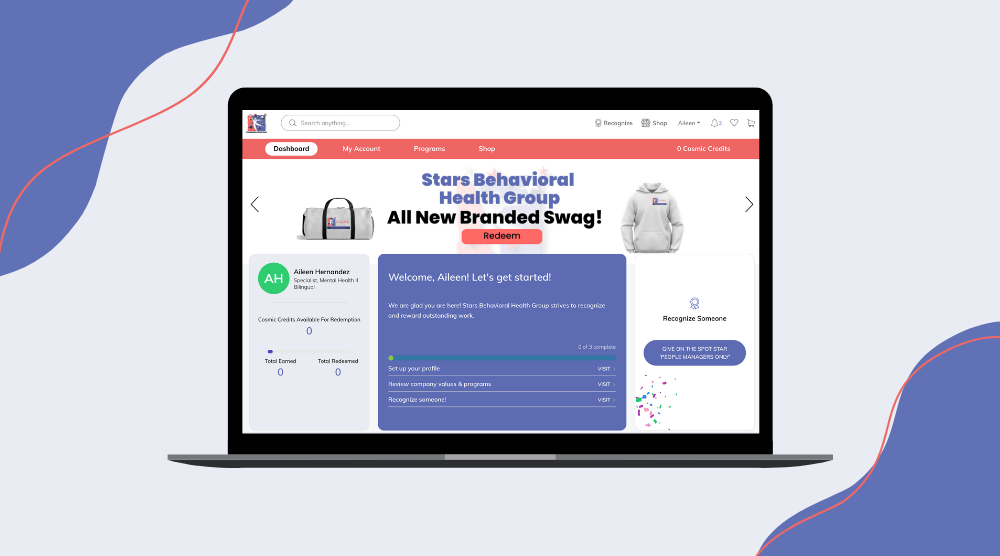
Both support sales challenges and contests. Rewardian adds challenges tied to sales targets, training or other goals, leaderboards, Bingo boards, scratch-off games and badges, and lets you assign gamification across the whole company or by role. Those mechanics already drive participation in Rewardian’s recognition programs: Stars Behavioral Health Group recognized 100% of its employees within eight months using a Bingo-based program, and 76% of Wheels employees played the Scratch Off Board when its program relaunched.
How do Rewardian and Awardco compare on pricing for sales incentives?
Rewardian publishes its pricing; Awardco is quote-only. Rewardian lists $2–$5 per seat plus a one-time setup fee of about $2,500, and sales incentives are included in the Engagement Plus tier at $5 per seat, alongside recognition. Contracts carry a 12-month minimum term and a monthly minimum, and some integrations carry one-time setup fees at lower tiers, typically waived at Engagement Plus. Awardco does not publish per-user pricing, offers Core, Plus and Pro plans, and bills implementation separately. Rewards are funded separately on both platforms; Awardco’s markup-free Amazon catalog stretches merchandise budgets further.
What help do you get designing and running the program?
Both assign dedicated support. Awardco provides a customer success manager and a Center of Excellence for program design and ROI modeling. Rewardian assigns a dedicated Account Manager to every client from implementation onward, holds monthly client meetings and quarterly business reviews, and can bring in creative, product and technology staff when a program needs them. Rewardian also runs its own in-house reward fulfillment, and participants get a separate, US-based support team by phone, email and in-platform, in English and Spanish, with critical issues handled under documented SLAs. Before launch, Rewardian worked with Opportunities, Inc.’s executive team to design a payout plan tied to each department’s monthly KPIs, so the build itself was straightforward.
How long does it take to launch?
Rewardian targets a guided 4–6 week implementation that includes incentive and program design, a staging environment for testing rules before launch, weekly implementation calls and role-based training. Awardco implementations typically run 4–12 weeks depending on scope. When Wheels merged with Donlen and LeasePlan, Rewardian moved the combined workforce off two separate rewards platforms, and 96% of employees received points from a manager’s budget within the first 90 days.
Which systems does each connect to, and how secure is each?
Rewardian connects natively to Microsoft Dynamics for CRM-driven earning, and other CRMs connect through its REST Open API; its HR connectors include Workday, SAP SuccessFactors, ADP and Oracle/PeopleSoft, plus Slack, Microsoft Teams and SSO. Awardco lists Salesforce among its integrations, alongside a Workday-certified integration, ADP, SAP SuccessFactors, BambooHR, HiBob, Slack, Microsoft Teams and SSO. On security, both hold SOC 2 Type 2 and are GDPR-compliant; Awardco adds ISO 27001, HIPAA and CCPA, and Rewardian adds PCI. Rewardian’s custom-field payroll exports also help finance teams handle the tax treatment of sales rewards.
Rewardian Differentiators
-
Sales incentives that run on your data — Points can be earned automatically from CRM activity and results — calls, meetings, training, closed deals and quota attainment — under rules for tiers, multipliers, bonuses, growth targets and product or SKU focus.
-
Recognition, sales and channel in one platform — The same program can reward your employees, your sales team and your distributors, dealers or other channel partners. Awardco’s incentives are for a company’s own employees.
-
Gamification built for sales — Challenges and contests tied to sales targets, leaderboards, Bingo boards and scratch-off games, assignable company-wide or by role.
-
A partner that designs the program with you — A dedicated Account Manager at every tier helps design incentive rules and payout plans, runs a 4–6 week launch with a staging environment, and stays involved through monthly meetings and quarterly business reviews.
-
Published, predictable pricing — $2–$5 per seat plus a setup fee of about $2,500, with sales incentives included at the $5 Engagement Plus tier, versus Awardco’s quote-only model.
-
Nimble, cost-effective technology — A multi-tenant, modular platform that ships frequent updates — most recently voice-to-text recognition, challenges and contests, and a program snapshot report.
-
PCI certification — Rewardian holds PCI certification alongside SOC 2 Type 2 and GDPR.
Where Awardco stands out for sales teams: spendable A-Pay cards that let winners use rewards immediately, physical AwardCodes that managers can hand out on the spot, a markup-free Amazon Business catalog with free shipping, Salesforce among its listed integrations, 4.9-star ratings on G2 and Capterra, and a Center of Excellence for program design. For a team that wants the fastest, most flexible way for managers to reward sales wins, Awardco is an excellent choice.
Verdict: which should you choose?
Choose the platform that matches how you want sales incentives to work.
Choose Awardco if your priority is giving managers fast, flexible ways to reward sales wins — SPIFFs, instant-spend A-Pay cards and on-the-spot AwardCodes — on a highly rated recognition platform with a markup-free Amazon catalog.
Choose Rewardian if you want sales incentives that earn automatically from your sales data under rules you define, with built-in contests and gamification, a dedicated Account Manager to design and run the program, published pricing, and the option to extend the same program to channel partners.
|
Talk to Rewardian See how a sales incentive program that runs alongside your employee recognition would look for your team, with a dedicated Account Manager and published per-seat pricing. Request a Rewardian demo. |
Frequently Asked Questions
Is Rewardian a good Awardco alternative for sales incentives?
Yes, particularly for teams that want sales incentives driven by rules and real sales data. Rewardian runs recognition and sales incentives in one platform, earns points automatically from CRM activity and results, adds contests and gamification, and includes a dedicated Account Manager at published pricing. Awardco remains a strong choice for fast, manager-issued sales rewards on its recognition platform.
Does Awardco offer sales incentives?
Yes. Awardco offers SPIFFs and targeted incentives for sales teams, A-Pay cards that let winners spend rewards immediately, and AwardCodes — trackable physical cards managers can hand out for sales challenges and contests. Its incentives are for a company’s own employees; it does not run channel partner programs.
Can Rewardian connect to Salesforce?
Rewardian’s native CRM integration is Microsoft Dynamics. Salesforce and other CRMs connect through Rewardian’s REST Open API, so sales activity and results can still drive points; confirm the scope for your setup during evaluation.
How much does a sales incentive program cost on Rewardian?
Sales incentives are included in Rewardian’s Engagement Plus tier at $5 per seat, alongside recognition, plus a one-time setup fee of about $2,500, with a 12-month minimum term and a monthly minimum. Rewards are funded separately. Channel partner programs are priced on request.
Can recognition and sales incentives run in the same platform?
Yes, on both. Rewardian and Awardco each run employee recognition and sales incentives in one platform with one rewards catalog. Rewardian can also extend the same program to external channel partners such as distributors and dealers.