Recognitions

Rewardian vs Workhuman
How does Rewardian compare to Workhuman?
Rewardian and Workhuman are both employee recognition platforms, but they sit at different ends of the market. Workhuman is an enterprise social-recognition leader built for large global organizations. Rewardian is a mid-market platform that launches faster, publishes its pricing, assigns every client a dedicated Account Manager, and runs employee recognition, internal sales incentives and external B2B channel incentives in one platform. If you are a global enterprise building a culture system of record and want deep people-analytics, Workhuman is a strong choice. If you are a 200–5,000-employee organization that wants a fast, supported launch, predictable pricing and incentives that reach beyond your own employees, Rewardian is built for that.
Workhuman (formerly Globoforce), founded in 1999 with offices in Framingham, Massachusetts and Dublin, serves more than 7 million users across 180+ countries. It pairs enterprise social recognition with continuous performance management, a large global rewards marketplace and its recognition-specific ‘Human Intelligence’ AI. It holds a 4.7-star G2 rating and was named a Leader in Everest Group’s 2025 Rewards & Recognition PEAK Matrix. Intermediate Capital Group holds a minority stake of roughly 10%, taken in 2020; Workhuman remains founder- and management-led.
Rewardian, founded in 2015, is the sister company of Brandmovers, which has run loyalty, promotions and digital engagement programs since 2003. Headquartered in Atlanta with offices in London and Mumbai, Rewardian is calibrated to the 200–5,000-employee mid-market. It runs its three use cases in one platform, with a 10M+ reward catalog that includes Amazon Business merchandise, Switchfly-powered travel and branded swag, fulfilled in-house. Every client gets a dedicated Account Manager from implementation onward, monthly check-ins and quarterly business reviews, and employees get US-based support by phone, email and in-platform, in English and Spanish. Rewardian reports a 94% client retention rate.
The two overlap on core recognition, global rewards and full-service support. They differ on scale, speed, pricing model and how far incentives reach: Workhuman concentrates on enterprise recognition and performance, while Rewardian combines recognition with sales and channel programs for mid-sized organizations.
Rewardian vs Workhuman: feature comparison
|
Feature |
Rewardian |
Workhuman |
Best fit |
|---|---|---|---|
|
Primary market |
Mid-market (200–5,000 employees) |
Large global enterprise |
Rewardian for mid-market |
|
Use cases in one platform |
Employee recognition, internal sales incentives, external B2B channel incentives |
Social recognition, continuous performance management, life events |
Rewardian |
|
Recognition & milestones |
Peer and manager recognition, milestones, nominations, badge boosting |
Enterprise social recognition, milestones, life events |
Tie |
|
Analytics & AI |
Program snapshot report, configurable dashboards, AI Recognition Assistant, multilingual voice-to-text |
Human Intelligence AI and people-analytics |
Depends on priority: Workhuman for enterprise people-analytics, Rewardian for program and budget reporting |
|
Rewards |
10M+ options, Amazon Business, Switchfly travel, branded swag and kits, in-house fulfillment |
Large global rewards marketplace |
Tie |
|
Implementation |
Guided, 4–6 weeks, with a staging environment for testing |
Typically 6–12 months for enterprise rollouts |
Rewardian |
|
Pricing |
Published: $2–$5 per seat plus ~$2,500 setup |
Quote-only, ROI-based |
Rewardian |
|
Account management & support |
Dedicated Account Manager at every tier; monthly meetings and QBRs; US-based employee support in English and Spanish |
Full-service enterprise partner with in-house rewards fulfillment |
Tie |
|
Integrations |
Workday, SAP SuccessFactors, ADP, Oracle/PeopleSoft, Microsoft Dynamics, Slack, Teams, SSO, REST Open API |
Enterprise HRIS/HCM, SSO, multilingual and multicurrency support |
Tie |
|
Internal sales incentives |
Native, with CRM-automated earning (Engagement Plus tier) |
Not offered |
Rewardian |
|
External B2B channel incentives |
Native: SKU and brand rules, partner tiers, MDF and rebate options |
Not offered |
Rewardian |
|
Security & compliance |
SOC 2 Type 2, PCI, GDPR |
SOC 2, GDPR (confirm current scope) |
Tie |
Rewardian vs Workhuman: Evaluation Criteria
Which is best for global enterprise vs mid-market?
Workhuman is built for large global enterprises; Rewardian is built for the 200–5,000-employee mid-market. Workhuman’s large rewards marketplace, people-analytics and recognition-specific AI serve enterprise scale. Rewardian delivers strong core recognition with a fast guided implementation, published per-seat pricing and native sales and channel incentives. G&W (Genesee & Wyoming), a 4,400-employee railroad operator, runs service anniversaries, safety, learning and gamified campaigns on Rewardian across the US and Canada, with recognition automated through its UKG system.
Who is not the right fit for either?
Small businesses and pure perks-or-discounts buyers are usually a poor fit for both. Workhuman is built for large enterprises, so smaller organizations may find it heavy and expensive; Rewardian targets the mid-market rather than the smallest teams or the largest global enterprises. Neither is a standalone discount marketplace or a full HRIS; both integrate with your system of record.
How do Rewardian and Workhuman compare on pricing?
Rewardian publishes per-seat pricing; Workhuman is quote-only with an ROI-based model. Workhuman prices by custom quote, backed by its ‘Workhuman Guarantee’, which fits enterprise procurement but makes quick comparison harder; some reviewers note point values can feel low relative to cost. Rewardian lists $2–$5 per seat plus a one-time setup fee of about $2,500, with a dedicated Account Manager included at every tier. Rewardian’s price rises with the feature tier: internal sales incentives are included in the Engagement Plus tier ($5 per seat), and travel and experiential rewards start at the Engagement tier ($4 per seat). Contracts carry a 12-month minimum term and a monthly minimum, and some integrations, such as Slack, Microsoft Teams and HRIS file feeds, carry one-time setup fees at lower tiers, typically waived at Engagement Plus. Channel incentive programs are priced on request. For a mid-market budget that values predictability, Rewardian’s published pricing is the practical difference.
How do migration and switching costs compare?
Both are guided, but Workhuman’s enterprise rollouts take far longer. Workhuman implementations are full-service but can run 6–12 months, with significant change management. Rewardian’s 4–6 week guided implementation includes discovery and program design, a staging environment for testing before launch, weekly implementation calls and role-based training. When Wheels merged with Donlen and LeasePlan, Rewardian moved the combined workforce off two separate rewards platforms, and 96% of employees received points from a manager’s budget within the first 90 days.
What integrations does each support?
Both integrate with enterprise HRIS, SSO and collaboration tools. Workhuman connects to enterprise HRIS and HCM systems with SSO and multilingual, multicurrency support suited to global deployments. Rewardian’s native connectors include Workday, SAP SuccessFactors, ADP, Oracle/PeopleSoft and Microsoft Dynamics, plus Slack, Microsoft Teams, Beekeeper (for deskless workers), LMS platforms and SSO; other systems connect through Rewardian’s REST Open API, as Caring Senior Service did with its Tendio software. For sales incentives, Microsoft Dynamics is Rewardian’s native CRM; other CRMs connect through the Open API.
How do Rewardian and Workhuman compare on compliance and security?
Both meet enterprise security standards. Workhuman operates enterprise-grade security, typically citing SOC 2 and GDPR; confirm its current scope. Rewardian holds SOC 2 Type 2, PCI and GDPR compliance. If payment-card data is in scope for your program, confirm whether both vendors hold PCI. Request each vendor’s current attestations during procurement.
What support and services does each provide?
Both are full-service, right-sized for different organizations. Workhuman is an enterprise partner with a strong support reputation and in-house rewards fulfillment, geared to large, complex programs. Rewardian assigns a dedicated Account Manager to every client from implementation onward, holds monthly client meetings and quarterly business reviews, and can bring in creative, product and technology staff when needed. Rewardian also runs its own in-house reward fulfillment, and employees get a separate, US-based support team by phone, email and in-platform, in English and Spanish, with critical issues handled under documented SLAs. Wheels’ Director of Total Rewards described Rewardian’s help through their post-merger relaunch as “consistent, hands-on support.”
Rewardian Differentiators
-
Recognition, sales and channel in one platform — Rewardian runs employee recognition, internal sales incentives and external B2B channel incentives together, with SKU- and brand-level points rules, partner tiers, deal-registration triggers and MDF or rebate options. Workhuman focuses on enterprise social recognition and performance management, with no sales or channel incentive programs.
-
Proven channel results — A Canadian industrial distributor’s enrolled customers grew purchases by 25% on average, against 5% for customers who didn’t enroll. Signia’s B2B loyalty program delivered 15% unit growth among members within 12 months, and Aquatrols raised off-season sales by up to 23%.
-
Faster launch — A guided 4–6 week implementation, versus the 6–12 month rollouts typical of enterprise platforms.
-
Published pricing — $2–$5 per seat plus a setup fee of about $2,500, versus Workhuman’s quote-only, ROI-based model.
-
A dedicated Account Manager at every tier — Monthly meetings, quarterly business reviews and US-based employee support in English and Spanish come with every program.
-
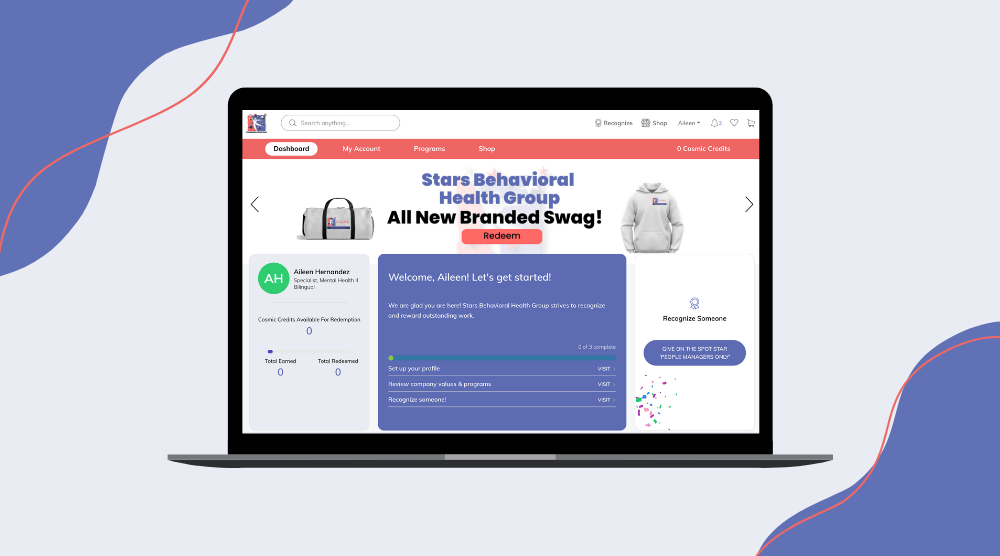
Gamification that drives participation — Bingo boards, scratch-off games, challenges and contests tied to sales targets, training or wellness goals, and leaderboards. Stars Behavioral Health Group recognized 100% of its employees within eight months using a Bingo-based program, and 76% of Wheels employees played the Scratch Off Board when its program relaunched.
-
Retention — A 94% client retention rate.
Where Workhuman stands out: it is an enterprise recognition leader, with one of the largest global rewards marketplaces, deep people-analytics and its recognition-specific Human Intelligence AI; it ranks #1 for Employee Recognition on G2’s Enterprise Grid; and it was named a Leader, and the only Star Performer among Leaders, in Everest Group’s 2025 Rewards & Recognition PEAK Matrix. For a large global enterprise building a culture system of record, Workhuman is an excellent choice.
Verdict: which should you choose?
Choose the platform that matches your scale, your timeline and how far your incentives need to reach.
Choose Workhuman if you are a large global enterprise that wants a large rewards marketplace, deep people-analytics and recognition AI, and analyst-validated enterprise leadership, and you have the budget and timeline for a multi-month rollout.
Choose Rewardian if you are a mid-market organization that wants a 4–6 week guided launch, published pricing, a dedicated Account Manager, and employee recognition, sales incentives and channel incentives in one platform.
|
Talk to Rewardian See how a recognition program that also covers your sales team and channel partners would look for your organization, with a dedicated Account Manager and published per-seat pricing. Request a Rewardian demo. |
Frequently Asked Questions
Is Rewardian a good Workhuman alternative?
Yes, particularly for mid-market companies that find an enterprise platform’s scale, pricing and timeline more than they need. Rewardian covers core recognition and global rewards, launches in 4–6 weeks, publishes its pricing, and adds internal sales and external channel incentives. Workhuman remains a strong choice for large global enterprises building a culture system of record.
What is the main difference between Rewardian and Workhuman?
Scale and scope. Workhuman is an enterprise social-recognition and performance platform with deep people-analytics. Rewardian is a mid-market platform that runs employee recognition, internal sales incentives and external B2B channel incentives together, with published pricing and a dedicated Account Manager.
Does Workhuman offer sales or channel incentives?
No. Workhuman focuses on enterprise social recognition and continuous performance management. It does not run sales incentive programs or channel programs for external participants such as distributors or dealers, and it has no SKU-level incentive rules. Rewardian runs both natively.
How long does implementation take?
Rewardian targets a guided 4–6 week implementation, including a staging environment for testing before launch. Workhuman implementations are full-service but, reflecting enterprise scope and change management, can run 6–12 months.
Which is better for mid-market companies?
Rewardian is purpose-built for the 200–5,000-employee mid-market, with a fast launch, published pricing and native sales and channel incentives. Workhuman is built for large global enterprises, and mid-market buyers may find it heavier and costlier than they need.